
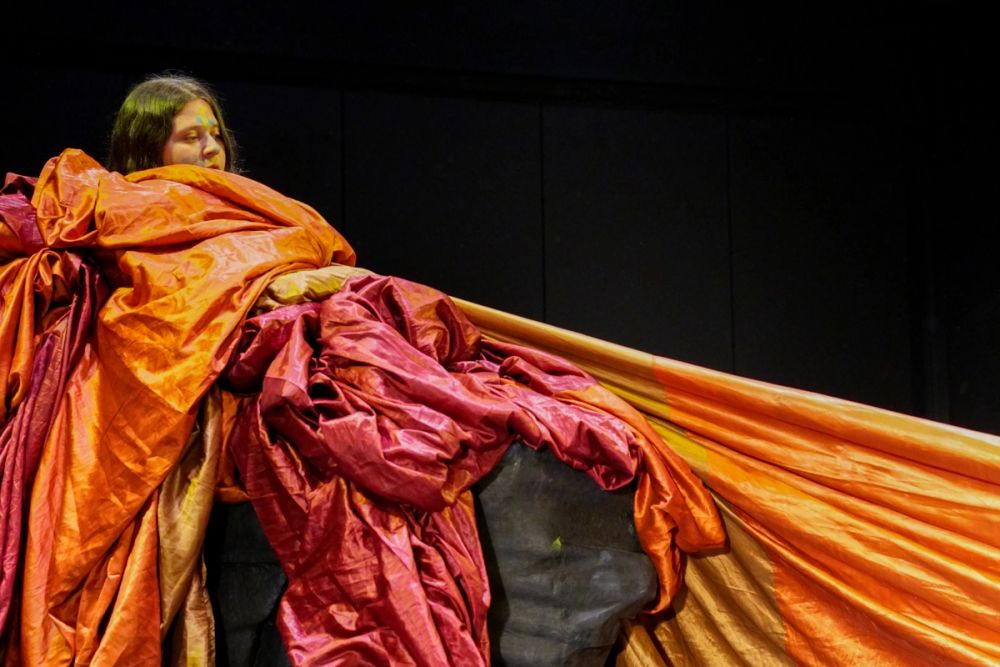
The Elsa Lindenberg Story. A conversation with Ilse Ghekiere
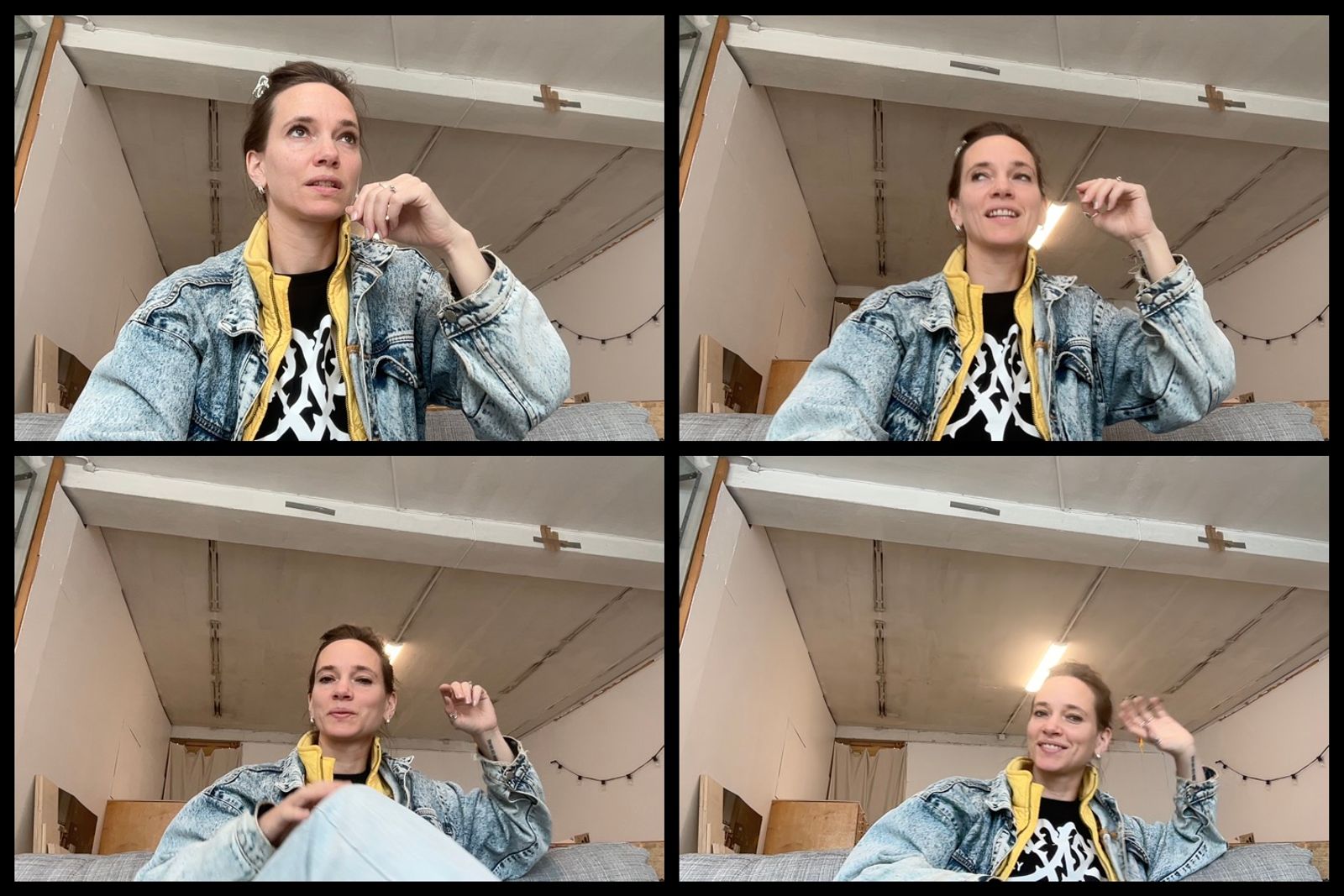
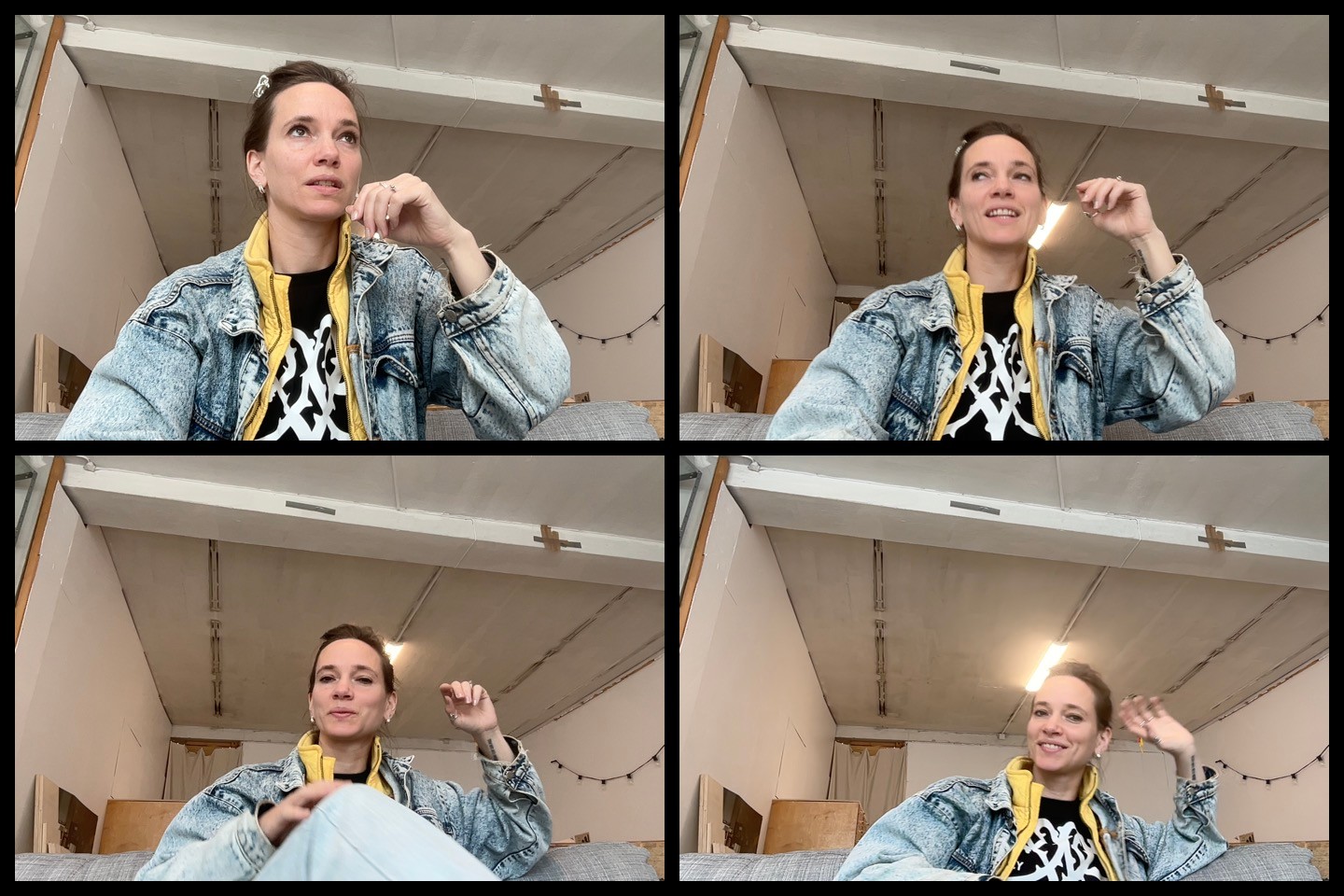
A forgotten apartment on St. Hanshaugen held the secrets of a dance pioneer. In this interview Ilse Ghekiere shares about her research work exploring the life of Elsa Lindenberg.
You describe your research as a "maze." What was the most striking or unexpected thing or object you found in that apartment at St. Hanshaugen that changed your perception of Elsa Lindenberg?
For a long time, whenever I heard about the mysterious guarded archive, I imagined that Ida Korsvold, the head of Elsa’s estate, kept some kind of box under her bed at the nursing home, and that inside that box was the archive. What I could not have imagined was that the apartment where Elsa and Ida had lived together was simply standing empty in St. Hanshaugen. Nor could I have imagined that the archive was, to some extent, the apartment itself and everything in it—that it would be so much.
Before I walked through that door, I was trying to reconstruct the what of Elsa’s life. But after spending countless days in the cluttered, overflowing apartment in St. Hanshaugen, I feel as though I have been swallowed by the who of Elsa’s life. That is why I find it difficult to point to a single object and say, “this stood out to me.”
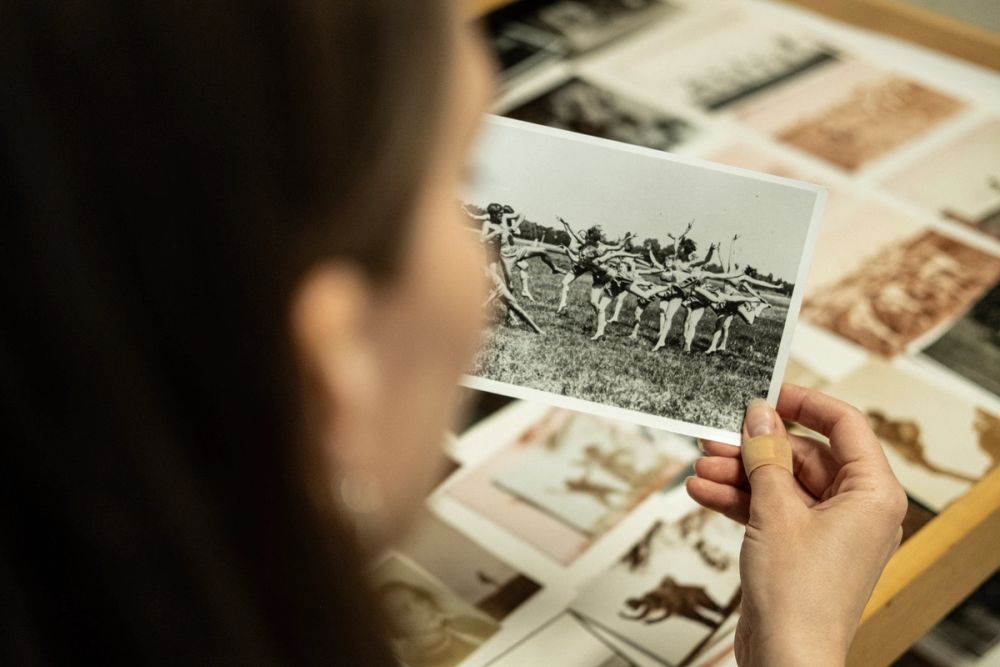
There were, of course, moments of excitement—like when we discovered the transatlantic correspondence between Elsa and Wilhelm Reich hidden beneath the blankets on Elsa’s bed. But it has been equally extraordinary to just hold these often hundred-year-old papers in my hands; to touch a swastika postage stamp on a letter sent by Goebbels; to leaf through her lectures, books, and letters; to see her appear in hundreds of photographs. There is something overwhelming about the vastness of a life—any life, actually—and the traces it leaves behind.
Meeting the 102-year-old Ida Korsvold sounds like a pivotal moment. Why do you think she was so protective of Elsa’s legacy, and what finally convinced her to share it with you?
It was Ida’s life project to write Elsa’s biography. Elsa was the most important person in her life, and Ida saw it as her responsibility to do justice to Elsa’s story. To her, it seemed evident that no one could do that work better than she could. After Elsa’s death in 1990, Ida embarked on extensive research, gathering an extraordinary amount of material from public archives. She also interviewed around sixty of Elsa’s former patients and students, and filmed the Spenningsregulering teaching that she carried forward as part of Elsa’s legacy.
When I began this project, I got in touch with Gro ZM Torgersbråten, one of the last Spenningsregulering teachers trained by Elsa. When I told Gro that I wanted to research Elsa’s life, she suggested that I join the Spenningsregulering study group. After about a year, I think Gro realized that I was serious and committed to the research. She reached out to Ida’s family, and through her I was introduced to Ida.
When I finally met Ida, she was already quite reduced and has lost her sight. She touched my arm and said, “This is a warm and kind arm.” From that moment of trust, our collaboration began.
Elsa Lindenberg is often mentioned only as Wilhelm Reich's partner. In your eyes, who was Elsa the artist, independent of the "cult figure" Reich?
There are many Elsa’s within Elsa’s life. But to me, Elsa is first and foremost a movement researcher—or at least that is the thread that runs through her life and work.
In the Store Norske Leksikon, she is described as the person who introduced Laban’s fridans to Norway and who later became a movement therapist. Yet, based on the collection of lectures she left behind, spanning from the mid-1930s to the late 1970s, it has become apparent that she was, in fact, developing her own approach to dance and movement education. She sought to create a methodology that combined Laban’s fridans with the principles outlined in Wilhelm Reich’s theories of body armour, life energy, and the importance of sexual freedom. Like Reich, she believed that this type of movement practice could function as a form of socialist propaganda in the struggle against fascism.
After the war, and following her acrimonious split with Reich, she turned away from psychoanalysis and radical politics toward the somatic teachings of Elsa Gindler. Yet throughout these shifts, she seems to return again and again to the same fundamental question: what does it mean to be human? In pursuit of that question, she continuously adapted her methodology and practice and did so throughout her life.
How do you transform documents, old letters, and black-and-white photos into a live experience or experimental class?
The immaterial and material archives are closely intertwined in this project. I have spent a great deal of time with the archival materials and am still not even halfway through them. In one sense, I am doing traditional archival research, much like a historian: trying to reconstruct Elsa’s life through facts, dates, places, events. At the same time, however, I am also studying her legacy through my own body.
Lindenberg consistently referred to three mentors: Rudolf von Laban, Wilhelm Reich, and Elsa Gindler. These three figures shared a deep interest in the body, yet each developed very different practices. Elsa’s teaching of Spenningsregulering emerged from the lineage of Elsa Gindler and continues to be taught today. Over the last three years, I have attended these weekly classes. In parallel, I entered what is known as “learning therapy” with Tore Næss, who continues to work within the Reichian tradition of body-oriented psychotherapy. In the UK, I met Anne Carlisle, an 85-year-old Laban teacher, who has been invaluable in helping me understand the dance dimension of Elsa’s work.
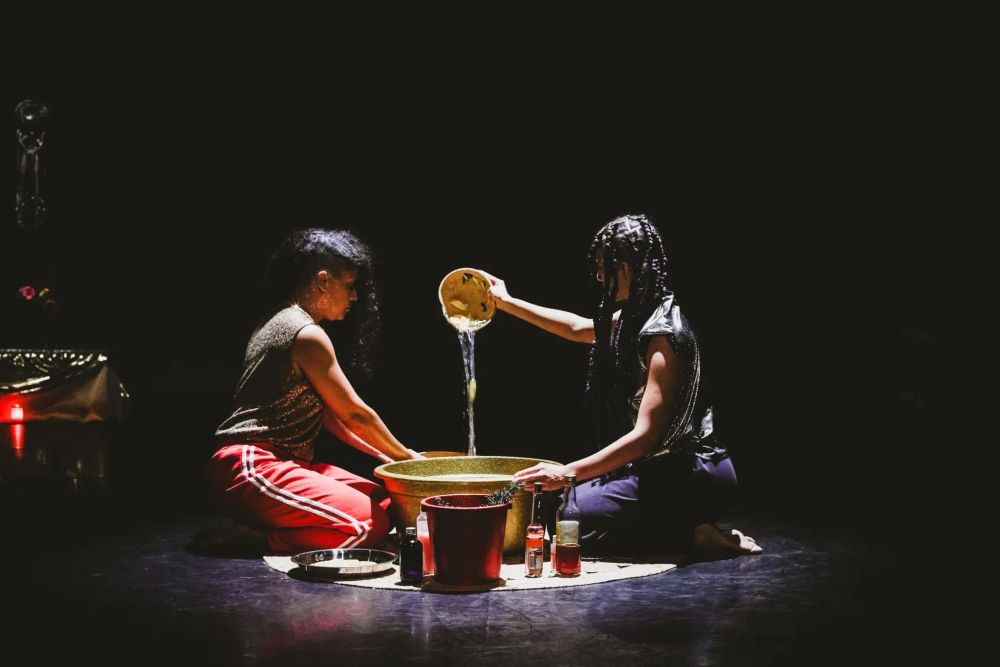
Through these encounters, I have been trying to create materials that might reflect—or speculate on—Elsa’s teachings. Much of dance history revolves around choreographies and stage works, yet so much of dance history unfolds elsewhere. The dance studio is one such place. Teaching, too, is a form of performance. Any teacher knows that.
As the founder of the Belgian organization ENGAGEMENT ARTS, you’ve worked extensively with power dynamics in the arts from a feminist perspective. You are often seen as someone linked to the #MeToo conversation. Is there something of that more activist-oriented work lingering in The Elsa Project?
This is a personal question, and I’m not entirely sure how to answer it, but I’ll try.
In 2022, I officially moved to Norway. With Engagement, we had just won the case against the theatre maker Jan Fabre—a trial that felt like a culmination of our work around sexual harassment in the arts. I had also become the mother of a two-year-old and I remember feeling a little lost and also exhausted.
During that summer, I read Everybody: A Book About Freedom by Olivia Laing. Elsa is not mentioned in the book, but it was through Laing that I learned Wilhelm Reich had lived in Norway. That discovery sparked my curiosity and set this whole project in motion. It almost felt as though I suddenly understood why I had ended up in Norway—that I was here on a mission, and that mission was Elsa.
Of course, Elsa is a forgotten figure in Norwegian dance history, and there is much to say about that. But I was also drawn to her life and to some of the broader questions that seem to have shaped her as a historical person. I think I left the Engagement Arts and #MeToo work carrying many unresolved questions about sexual and bodily freedom. I became intrigued about the tension between sexual transgression and liberation. When does a crossing of someone’s boundaries cause harm, and when can it lead to something empowering? And who decides? How do we navigate the tension between freedom and responsibility, desire and care? And so, Elsa’s life and work have offered me a new context in which to explore and reflect on some of these questions.
Elsa was a pioneer of dance therapy. In our digital age, why is her 100-year-old philosophy on the healing power of movement still relevant?
Elsa was never very interested in healing. Nor was she interested in founding a therapy. In fact, she was critical of many of the experimental therapies that emerged in the 1960s and focused on self-improvement.
Throughout her life, she kept returning to the importance of the body and the senses as ways of investigating the world: observing, experimenting, and remaining patient in our attempts to understand. She was interested in what it means to be human.
So what does it mean to be a human? What I learned from this research is that we do not inherit answers from the past; we inherit its questions.
The Elsa Project vises 26.–29. november. Les mer og finn billetter her