Utopia and Collapse, Conversations on Humanity and Technology: Rebekka Sofie Bohse Meyer
What happens to the human being when technology alters the very conditions of our existence?
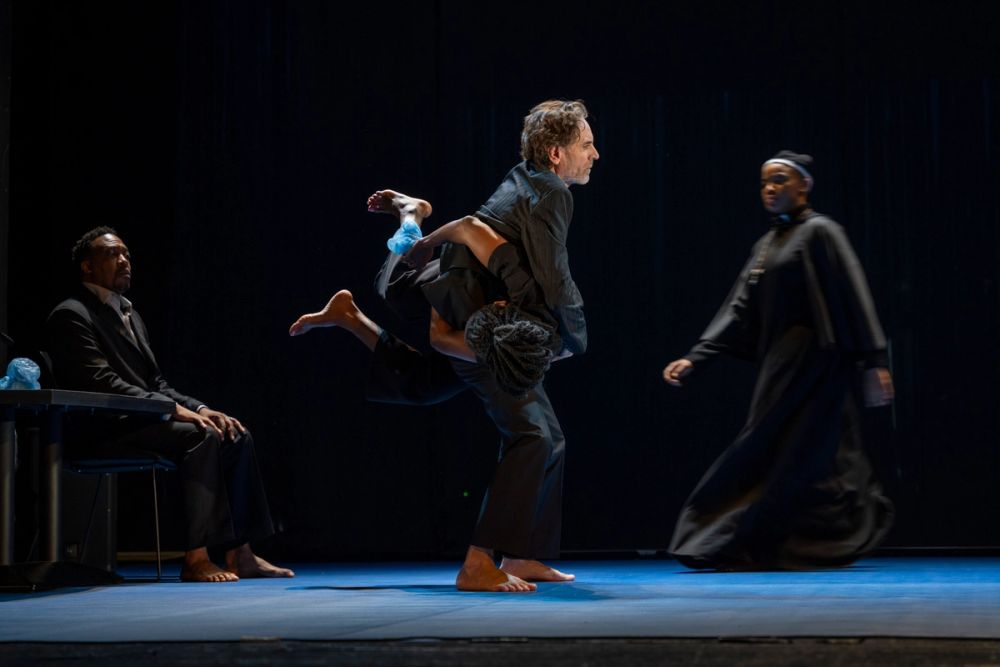
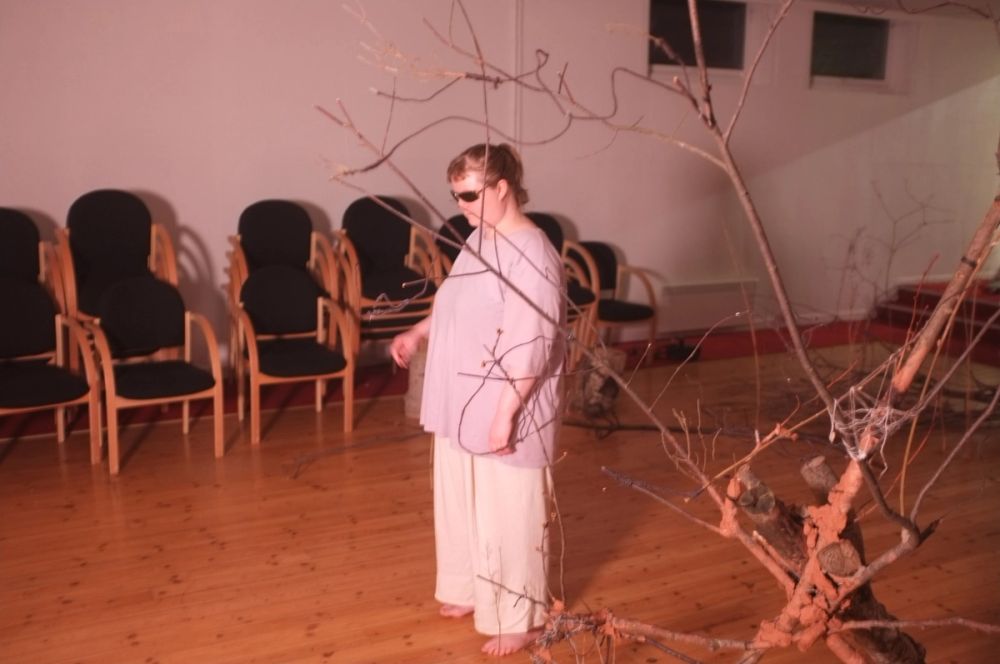
Through the program Utopia and Collapse, three unique performing arts projects explore whether digital and biological advancements are leading us toward a better future or a total breakdown. From the invisible cancer cells in NanoPlanet and the body's vulnerable cycles in MORTALITIES, to the power-critical digital spaces of NFTs: Non Fuckable Tokens, our traditional views on identity and existence are put to the test. We have asked the directors behind these performances four identical questions about how they translate complex structures into physical stage experiences – and what kind of impact they hope to leave on the audience.
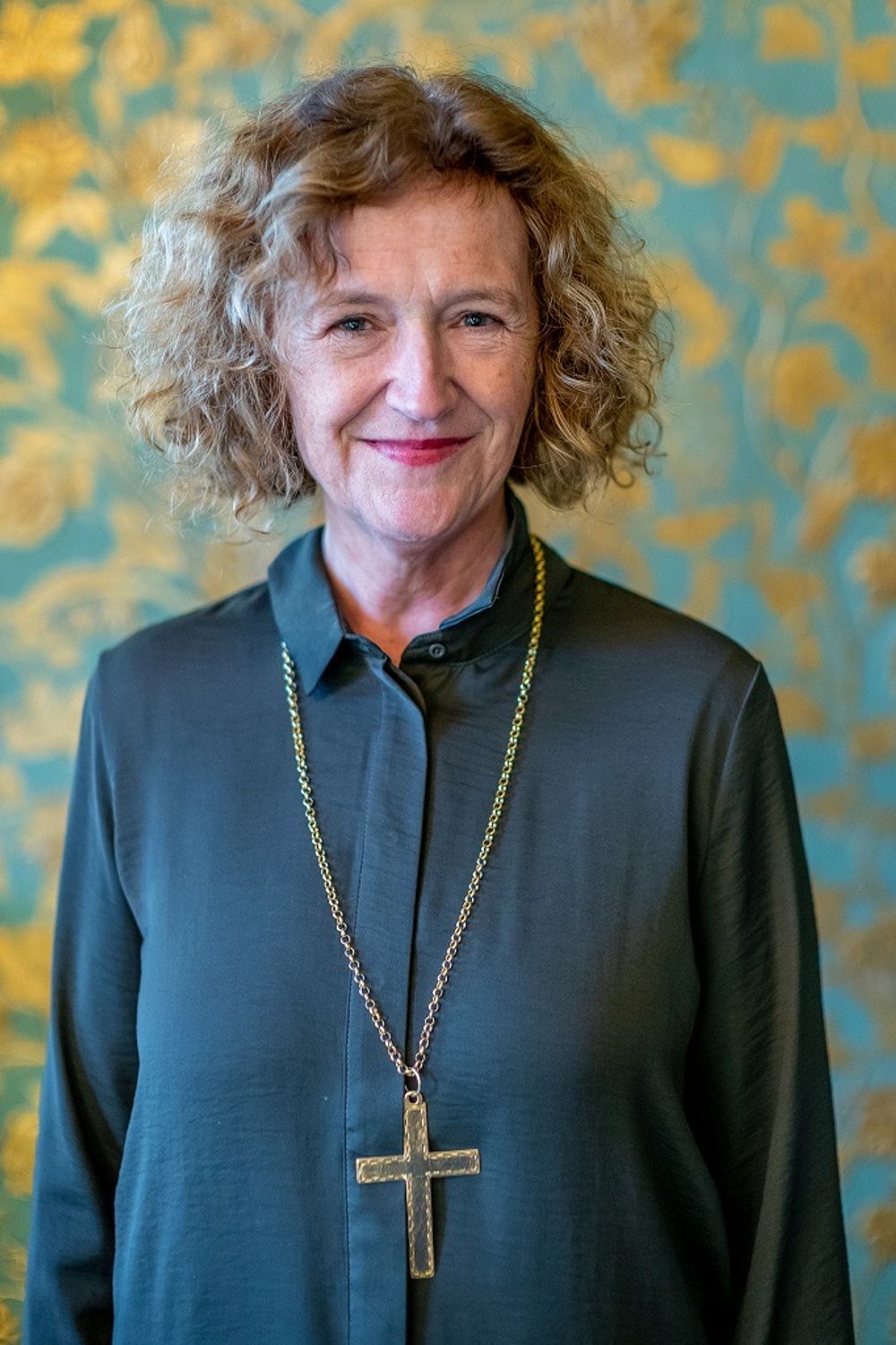
Interview with Rebekka Sofie Bohse Meyer: MORTALITIES
In what way does the performance challenge our traditional view of what a human being is? MORTALITIES allows the audience to step into death with their living bodies. Through VR technology, you move into a digitally constructed world of death where the physical and the virtual merge. This dual presence—being simultaneously physical and digital—challenges the boundaries between life and death, body and technology, reality and illusion.
The VR equipment functions as a kind of portal to an alternative reality where logic and physical laws are twisted. In this liminal state, our existence is challenged and renegotiated, giving us the opportunity to explore new facets of the world—and of ourselves.
At the same time, you are forced to rediscover your own body; in the virtual world, you become acutely aware of your senses and orientation, as if you must learn how to be human all over over again.
What dramaturgical function does VR have in the performance, and what does it do to the audience's experience? With VR technology, one can create spaces, scenographies, and experiences that would be impossible in physical reality. The technology makes it possible to bend time and space, distort dimensions, and suspend natural laws like gravity. In MORTALITIES, VR is combined with live and 3D sound as well as physical, sensory objects, forming a multi-sensory whole where the digital and the corporeal are linked. Here, it is not performers who guide the experience, but the music and visuals themselves that lead the audience through six different perspectives on death.
The performance distinguishes itself from other VR experiences through its collective approach: four audience members participate simultaneously. All content is live-streamed and live-tracked, allowing them to see each other as avatars and interact in the virtual space. This multiplayer function makes MORTALITIES one of the most ambitious VR experiences in Danish theater and creates a social dimension that makes the unknown feel safer to navigate.
What is the biggest challenge in translating complex themes such as biology or digital structures into a physical stage experience? (How do you make the abstract concrete?) This is both an artistic and a technical challenge. VR technology holds great potential, but also clear limitations. It is a costly and technically demanding medium that requires a high level of specialized knowledge. Consequently, the development of the performance has spanned several years and involved a broad team of artists, technicians, and developers to make the vision possible.
While traditional performing arts allow for improvisation and last-minute changes, VR is far more inflexible. Once the virtual scene is created, even small adjustments require significant resources. This places entirely different demands on planning, precision, and collaboration between artistic and technical disciplines.
Another challenge has been breaking free from traditional "computer aesthetics." It was important to develop a visual expression that doesn't just mimic technological conventions but feels timeless and artistically independent. This process evolved through close collaboration between the director, visual artist, and VR developers, aiming to create an aesthetic that functions within the medium's limits while simultaneously reaching beyond them. Since this is an opera, the soundscape has played just as crucial a role as the visuals. VR often prioritizes imagery over sound; therefore, it required extensive cooperation between the composer, singers, and sound engineers to create a sonic world that can stand alongside the visuals and support the audience's sensory experience.
Finally, the work on the audience's experience has been almost anthropological. It takes many tests to understand how people react in a universe where the logic differs from the physical world. If one wants to perceive the digital sensorially, the digital cannot stand alone; thus, the interplay between the virtual and the physically real has been decisive for this project.
What conversation do you hope the audience will start with each other afterwards? I hope that MORTALITIES opens up a conversation about death, technology, and opera as an art form. First and foremost, I hope the performance can create new perspectives on death—a subject still characterized by taboo and narrow definitions, at least in a Danish context. With MORTALITIES, I try to show that death contains far more nuances: it manifests in memories, in the circular rhythm of decay, in monuments, in the transitions between life and death, and as the beginning of something new.
At the same time, I hope the audience reflects on the role of technology. VR is still a new medium in constant development, and it is important that we critically examine how it affects our understanding of body, time, and space—not just through commercial interests, but through artistic experimentation.
Finally, I want to open up sensory and physical forms of participation in a traditional genre like opera. VR allows the audience to become an active part of the narrative—even in something as intangible as death itself.
March 12–14 / 14:00 / Main Stage
VR opera with a duration of 55 minutes. Multiple time slots available per day. Performed in English.